Merry Christmas Deer: A Designer’s Practical Review
As an embroidery designer who has spent years digitizing patterns and reviewing countless digital assets, I approach every new file with a mix of curiosity and skepticism. We have all been there: downloading a digital embroidery file that looks stunning on a screen but turns into a tangled mess of thread breaks and puckering on actual fabric. Today, I am taking a close look at the Merry Christmas Deer design to see if it holds up under the needle for real-world projects.
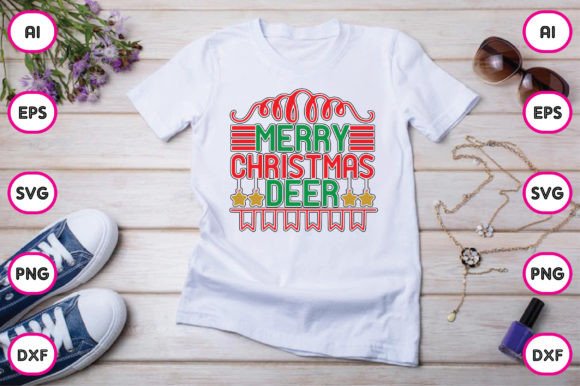
This asset falls under the category of Freebies and Graphics, which often raises questions about quality and usability. However, after examining the provided files—specifically the Ai, EPS, SVG, and high-resolution PNG formats—I found a versatile resource that serves different purposes depending on your workflow. While this package is marketed heavily toward T-shirt design and digital graphics, its utility extends further for those of us in the craft and apparel space.
First Impressions and Visual Personality
The first thing that strikes me about the Merry Christmas Deer is its clean, graphic silhouette. It does not rely on excessive detail or tiny, fragile lines that are notorious for causing issues in embroidery. Instead, it offers a bold, recognizable shape that communicates the holiday theme instantly without feeling cluttered. The mood is festive yet modern, avoiding the overly traditional or kitschy aesthetics that can sometimes date a product.
For an Etsy seller or small shop owner, visual clarity is currency. Customers scrolling through hundreds of listings need to understand what they are buying in a split second. This design’s strong outlines and balanced composition make it ideal for creating eye-catching printable mockups and social media previews. The inclusion of an Ai file allows you to change colors easily, which is crucial for testing how the design might look against various thread colors before you even thread your machine.
Real-World Application: From Screen to Stitch
Let us move beyond the digital preview and imagine using this design in a tangible embroidery project. I recently considered a similar deer motif for a custom order of holiday tote bags. The client wanted something that felt handmade but professional. Here is where the distinction between a graphic file and a dedicated machine embroidery design becomes critical.
The Merry Christmas Deer package provides vector and raster graphics (Ai, EPS, SVG, PNG). If you are an experienced digitizer, these files are gold. You can import the SVG or Ai file into your embroidery software and create your own stitch path. This gives you total control over stitch density, satin stitch width, and underlay settings. For a tote bag design made from heavy canvas, you might choose a dense fill stitch to ensure full coverage. For a delicate baby embroidery project on a onesie, you might opt for a lighter approach with more running stitch outlines to keep the fabric soft.
If you are not digitizing from scratch, this graphic serves as an excellent reference for applique. An applique design approach would involve cutting fabric in the shape of the deer and stitching it down. This reduces bulk and stitch count, making it perfect for sweatshirt embroidery where thick layers of thread can feel stiff and uncomfortable against the skin. The clean edges of this specific deer graphic make it exceptionally suitable for applique work.
Navigating Fabric and Hoop Constraints
While the design is visually strong, practical application requires caution. Not every surface is created equal. If you are planning to use this on stretchy fabric like a jersey knit t-shirt, you must prioritize stabilization. Without proper stabilizer, even a simple shape can distort during stitching. I recommend testing on scrap fabric first to gauge how the material reacts to the needle penetration.
Additionally, consider the hoop size. While the deer itself may fit in smaller hoops, adding text or surrounding elements could require a larger frame. Always check your machine’s maximum hoop capacity before finalizing your layout. For curved surfaces like caps or hats, the rigidity of the design needs to be balanced with the curvature of the garment. A dense fill might cause pulling, so adjusting the density or switching to a satin border with a sparse fill is often necessary for headwear.
Dark fabrics present another challenge. The PNG file included is 300dpi, which is high quality for printing, but for embroidery, you need to think about contrast. If you are stitching white thread on black fleece, ensure your digitizing includes proper underlay stitches to prevent the background fabric from peeking through. This is where the ability to change colors in the Ai file helps you visualize contrast before you start stitching.
Commercial Viability and Brand Consistency
For commercial embroidery professionals, consistency is key. Using a well-balanced graphic like Merry Christmas Deer helps maintain a cohesive brand aesthetic. Whether you are producing personalized gifts for the holiday season or creating stock for your craft business, the professionalism of the final product reflects directly on your brand.
However, a crucial note on licensing: since this is listed under Freebies, you must verify the specific license terms before selling finished products. Some free graphics are for personal use only, while others allow commercial use of the physical item but not the digital file itself. Never assume. Check the download source or contact the creator if the terms are unclear. Protecting your small shop product line from copyright issues is just as important as the quality of the stitch.
Final Verdict for Makers and Designers
The Merry Christmas Deer is a solid addition to your library of design assets. It shines brightest when used by designers who understand how to translate vector graphics into stitch files or applique templates. It is less of a "plug-and-play" solution for beginners who expect a pre-digitized PES or DST file, but for those with digitizing skills, it offers excellent flexibility.
Use it for holiday embroidery on home decor like pillow covers or kitchen towels, where the sturdy nature of the design can handle frequent washing if properly secured. Avoid using it on extremely thin or sheer fabrics unless you are using a stabilizer that can be torn away cleanly without damaging the garment. Ultimately, this graphic empowers you to create unique, high-value items that stand out in a crowded market. Just remember to test, stabilize, and verify your rights before you hit the sell button.