Reviewing Witches Brew for Real Embroidery Projects
As a designer who has spent years digitizing patterns and troubleshooting machine errors, I approach every new machine embroidery design with a mix of curiosity and skepticism. We have all been there: downloading a file that looks stunning on screen but turns into a tangled mess of thread breaks and puckering on fabric. Recently, I took a close look at Witches Brew, a graphic asset that caught my eye in the Freebies section. While it is categorized under Graphics, its potential for translation into textile art is worth exploring for any serious crafter or small business owner.
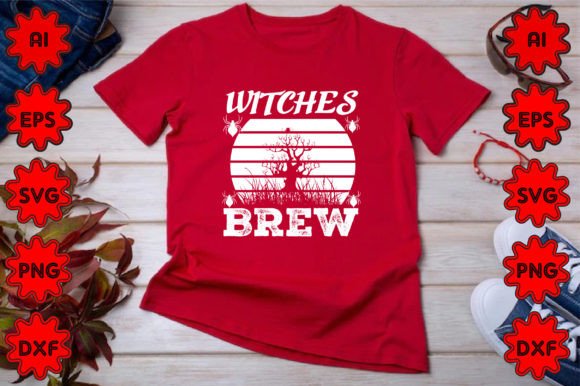
The first impression of Witches Brew is defined by its bold, thematic personality. It evokes a sense of playful mystery, perfect for the autumn season or for niche markets that embrace gothic whimsy. The layout feels balanced, with shapes that suggest movement rather than static rigidity. For an embroidery project, this is crucial. Static, overly complex illustrations often fail to translate well because the needle cannot replicate the subtle gradients of a digital print. However, designs with strong silhouettes and clear negative space, like this one, tend to stitch out cleanly. The visual mood suggests it would naturally belong on items meant to be seen and discussed, such as a custom tote bag or a statement sweatshirt.
From Screen to Stitch: Practical Application
Let us move beyond theory and imagine a real-world scenario. Suppose you are preparing a batch of custom apparel for a local craft fair or updating your Etsy shop with seasonal items. You decide to use Witches Brew on a heavy-weight cotton hoodie. This is where the distinction between a vector graphic and an embroidery file becomes critical. The product description notes that you will receive Ai, EPS, and SVG files. These are excellent for cutting machines like Cricut or Silhouette, and for editing colors in Illustrator or Corel Draw. However, they are not native embroidery formats like PES or DST.
This means you, the designer, must take the extra step of digitizing or converting these graphics if you intend to stitch them. If you are using the SVG for a cut-out applique design, the process is straightforward. You can cut the shape from felt or cotton and use a satin stitch or running stitch to secure it to the garment. This method reduces stitch density significantly, making it ideal for stretchy fabrics like sweatshirt material. If you plan to create a full fill stitch version, you must be mindful of the detail level. Tiny, intricate lines in the original graphic may need to be simplified to prevent thread breaks and ensure the design remains legible after washing.
Fabric Choices and Hoop Considerations
The success of any embroidered patch or direct-to-garment design relies heavily on the substrate. For Witches Brew, I recommend testing on stable, medium-to-heavy weight fabrics. A canvas tote bag is an excellent candidate. The tight weave of canvas supports higher stitch density without puckering, allowing the design to pop with vibrant thread colors. Conversely, using this design on a thin, silky blouse or a loosely knitted baby item requires caution. Without proper stabilizer, the tension of the stitches could distort the fabric, ruining the handmade product's professional appearance.
Hoop size is another practical constraint. Before committing to a large back piece on a jacket, check the dimensions of the converted design. If the graphic is expansive, it may require a larger hoop, which limits the types of garments you can use. Curved surfaces, such as caps or fitted sleeves, present additional challenges. Stitching a large, flat graphic onto a curved cap brim can lead to registration issues where the design pulls away from the edges. In such cases, scaling down the design or opting for a simpler, smaller version of the motif might yield a more polished finished product.
Commercial Viability and Brand Consistency
For Etsy sellers and creative entrepreneurs, the visual appeal of a design directly impacts buyer engagement. Witches Brew has a distinct character that can help establish brand consistency if your shop focuses on quirky, seasonal, or alternative aesthetics. Customers often look for personalized gifts that feel unique. A well-executed embroidery of this design on a kitchen towel or apron adds value beyond the base cost of the item. It transforms a generic household object into a boutique product.
However, professionalism is key. A sloppy stitch-out can damage customer trust. Always inspect small details before listing an item. Are the corners sharp? Is the thread color contrast sufficient against the fabric background? Dark fabrics can swallow dark thread colors, so consider using lighter threads or adding a white underlay if you are digitizing the file yourself. Testing the design in black and white mockups can also help you judge the clarity of the shapes without the distraction of color.
Technical Notes for Designers
Since Witches Brew is provided as a set of vector graphics (Ai, EPS, SVG), here are some practical steps to ensure quality results:
- Test on Scrap Fabric: Never stitch directly on your final garment. Use a similar scrap piece to check tension and density.
- Check Stitch Density: If converting to embroidery, avoid excessive overlap. High density leads to stiff, cardboard-like patches that are uncomfortable to wear.
- Use Proper Stabilizer: Match the stabilizer to the fabric. Cut-away for stretchy knits, tear-away for stable wovens.
- Verify Licensing: Even though this is listed under Freebies, always confirm the license terms. Ensure you are allowed to use the design for commercial embroidery projects and selling finished items.
- Inspect Small Details: Vector files can have tiny nodes or gaps. Clean up the path in Illustrator before converting to ensure smooth stitching.
In conclusion, Witches Brew offers a strong foundation for creative embroidery work, provided you respect the technical limitations of the medium. It is not just a digital asset; it is a starting point for tangible, high-quality handmade products. By carefully considering fabric texture, hoop size, and stitch technique, you can turn this graphic into a standout feature on anything from a holiday gift to a signature piece in your small shop product line. The key lies in the execution: thoughtful preparation, rigorous testing, and an eye for detail will ensure that your final embroidered piece meets the high standards your customers expect.